
Mark | Senior Energy Engineer, 49
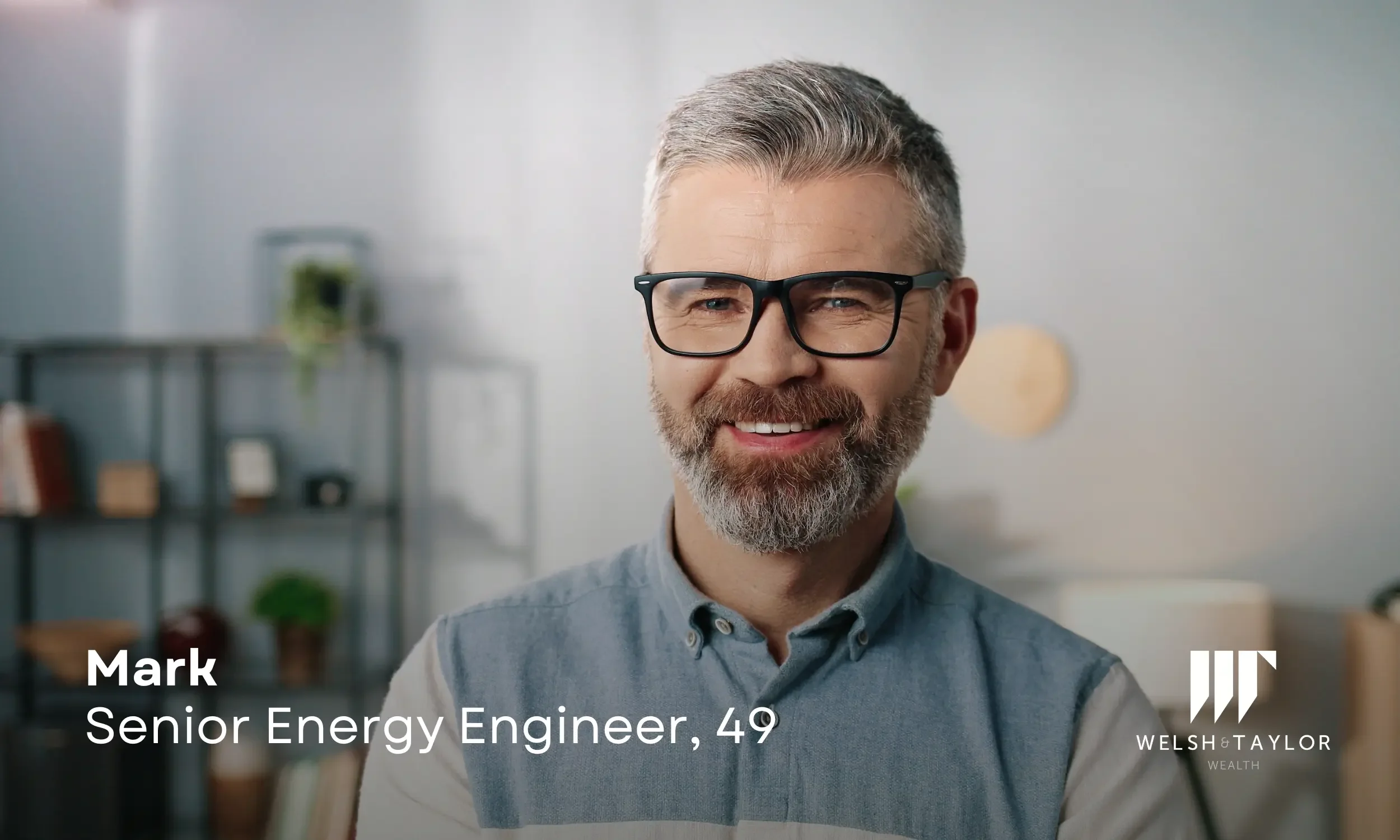
Assets on Arrival: £510,000 in workplace and legacy personal pensions
Income: £180,000+ including annual bonus
Goal: Retire by age 58 without sacrificing current lifestyle
Background
Mark had spent over 20 years working across major North Sea energy projects. Despite a high income, he felt frustrated by a lack of strategic advice. His pension was split across four old schemes from previous employers, his tax position was becoming increasingly complex, and he felt he was “leaving money on the table.”
He was recommended to Welsh & Taylor Wealth by a colleague who valued our proactive approach and structured planning framework.
Problems Mark Faced
No coordinated strategy: Multiple unreviewed pensions with mismatched investment approaches
Tax inefficiency: He exceeded the higher-rate threshold annually but wasn’t using allowances effectively
Bonus planning issues: Large irregular bonuses pushed him into unnecessary tax charges
Lack of clarity: No idea if retiring at 58 was realistic or whether he’d run out of money
He had previously spoken to a national advice firm but found their communication slow and generic - “lots of paperwork, little forward-thinking.”
How Welsh & Taylor Wealth Helped
Comprehensive cashflow planning
We modelled aggressive, moderate, and conservative retirement scenarios.
Demonstrated he could retire at 57 with adjustments to investment structure.
Strategic pension consolidation
Brought four pensions into one modern, tax-efficient structure.
Ensured alignment with his risk profile, required income, and long-term plans.
Advanced tax planning
Used carry-forward opportunities for enhanced pension contributions.
Structured bonus deferrals into pension to reduce annual tax bills.
Ongoing strategic reviews
Monitored investment performance
Reassessed retirement timeline
Updated the plan following job changes and pay increases
Outcome
Within 18 months:
Pension value increased to £575,000 due to contributions and improved strategy
A realistic pathway to retiring at 57
A clear long-term plan for future inheritance that would otherwise risk unnecessary IHT
Significantly reduced annual tax liability through smarter pension and allowance usage
Mark now describes his financial situation as “the most organised and tax-efficient it has ever been.”
Frequently Asked Questions
-
Not necessarily. Some people choose to consolidate their pensions to make them easier to manage, but this isn't the right solution for everyone. Before transferring any pension, it's important to understand the benefits, guarantees, charges and investment options of each plan, as valuable features could be lost.
-
Depending on your circumstances, pension contributions may provide valuable tax relief and could form part of an effective tax planning strategy. The amount of tax relief available depends on your personal circumstances and current tax legislation, which may change in the future. A financial adviser can help determine the most suitable approach for you.
-
A personalised financial plan, supported by cashflow modelling, can help you understand how different retirement dates may affect your future finances. By considering your income, savings, pensions, expenditure and long-term goals, cashflow modelling can provide useful projections to support planning. These projections are based on assumptions and are not guarantees of future performance or outcomes.
This communication is for general information only and does not constitute financial advice. The value of investments and any income from them can go down as well as up, and you may not get back the full amount invested; your capital is at risk. The tax treatment of investments, pensions and any related planning depends on individual circumstances and may be subject to change in the future. Pension and tax planning are complex and the suitability of any approach will vary from person to person. The examples and outcomes referenced are specific to those clients’ circumstances and may not be appropriate for you. You should not act on the basis of this information alone and should seek personalised advice before making any financial decisions.